
General Wellness and Longevity
The Body's Silent Workhorses: The In-Depth Guide to Liver & Kidney Health
Jan 21, 2026

Jake Kaiser
jakesjourney.co
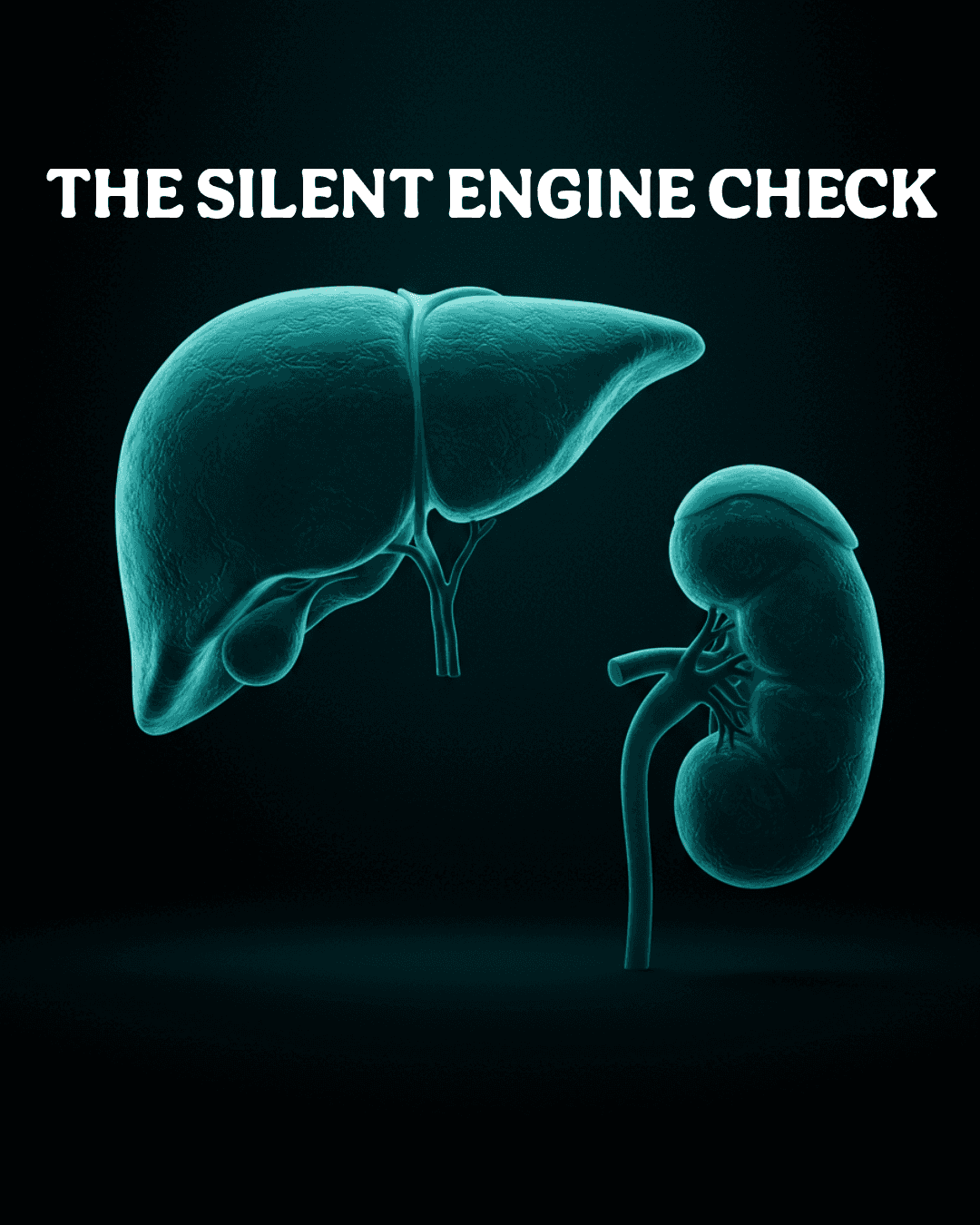
Your liver and kidneys are the unsung heroes of your physiology. They aren't glamorous like your brain or powerful like your heart, but they are the tireless workhorses operating behind the scenes. Your liver is a master chemical plant, performing over 500 vital functions from metabolizing nutrients to synthesizing cholesterol. Your kidneys are a miraculous purification system that filters your entire blood volume of 5 liters more than 30 times per day.
Their health is the bedrock of your overall health. When they function optimally, your metabolic and cardiovascular systems can thrive. When they decline, everything else follows. The problem is, this decline is almost always silent. There are no obvious symptoms until significant damage has been done.
Chronic kidney disease (CKD) affects an estimated 37 million American adults, and 9 out of 10 don't even know they have it [1] [2]. Non-alcoholic fatty liver disease (NAFLD) is a condition driven by diet and lifestyle that now affects nearly 30% of the global population. These are not fringe conditions; they are silent epidemics.
This is why we look at the data. Blood and urine markers are our only window into the real-time performance of these crucial organs. Understanding them allows you to move from being a passenger to the pilot of your own health, spotting trouble decades before it becomes a crisis.
Your Liver: The Master Processing Plant
Your liver has to process everything you consume: food, drinks, medications, and alcohol. When it's overwhelmed or damaged, its cells become inflamed and "leak" enzymes into your bloodstream. Measuring these enzymes is our most direct way to assess liver stress.
ALT (Alanine Aminotransferase) & AST (Aspartate Aminotransferase)
These are the front-line markers of liver cell injury. When your doctor orders a "liver panel," these are the first numbers they look at.
What they mean: Think of ALT and AST as distress signals from your liver. ALT is more specific to the liver, while AST is also found in muscle and other tissues. A key diagnostic clue is the AST:ALT ratio. A ratio greater than 2:1 is often a strong indicator that the liver stress is alcohol-related.
Standard "Normal" Range: < 40 U/L
Longevity Optimal Range: < 25 U/L for men, < 20 U/L for women. The science is clear that the risk for non-alcoholic fatty liver disease (NAFLD) and liver-related mortality begins to climb even within the "normal" range.
GGT (Gamma-Glutamyl Transferase)
GGT is arguably the most sensitive marker for liver stress and is a powerful, independent predictor of all-cause mortality.
What it means: GGT is involved in the metabolism of glutathione, your body's master antioxidant. When your liver is under significant oxidative stress (from alcohol, toxins, or metabolic dysfunction), it burns through glutathione at a high rate, causing GGT levels to rise. A high GGT is a direct sign that your liver's antioxidant defenses are being overwhelmed.
Standard "Normal" Range: < 60 U/L
Longevity Optimal Range: < 30 U/L for men, < 20 U/L for women.
Your Kidneys: The Master Filtration System
Assessing kidney health comes down to two key questions: 1. How well are the filters working (Rate)? and 2. Are the filters damaged (Integrity)?
1. Filtration Rate (eGFR & BUN)
Your eGFR (estimated Glomerular Filtration Rate) is the best measure of your kidneys' filtration horsepower.
The Markers: eGFR is typically calculated from creatinine, a muscle waste product. However, this can be misleadingly low in people with high muscle mass or those who take creatine supplements. The superior marker is Cystatin C, a protein unaffected by muscle mass, which provides a far more accurate eGFR. A secondary marker is BUN (Blood Urea Nitrogen), a waste product of protein digestion. While less precise, the BUN:Creatinine ratio can offer clues about hydration status and kidney function.
What it means: A declining eGFR means you are progressively losing kidney function. It's a direct measure of how much blood your kidneys can clean per minute.
Standard "Normal" Range (eGFR): > 60 mL/min/1.73m²
Longevity Optimal Range (eGFR): > 90 mL/min/1.73m²
2. Filter Integrity (UACR)
This might be the most important and often overlooked marker for early kidney damage.
What it is: The Urine Albumin-to-Creatinine Ratio (UACR) is a simple urine test that checks for the presence of albumin, a large protein that should not be in your urine.
What it means: Think of your kidney's filters (glomeruli) like a high-tech coffee filter. It's designed to let water and small waste products pass through while keeping large, important things (like albumin proteins and red blood cells) in the blood. When albumin shows up in your urine, it means the filter is damaged and has become "leaky." This is one of the earliest signs of kidney disease, often appearing years before eGFR begins to decline.
Standard "Normal" Range: < 30 mg/g
Longevity Optimal Range: < 10 mg/g
How to Protect Your Organs
The strategies to protect your liver and kidneys are deeply intertwined. What's good for one is almost always good for the other.
Tame Your Sugar and Alcohol Intake: This is non-negotiable. Excess fructose (from sugary drinks and processed foods) and alcohol are metabolized directly by the liver and are the primary drivers of fatty liver disease and inflammation. Limiting them is the single most powerful step you can take. [3]
Maintain Excellent Metabolic Health: Insulin resistance is a root cause of both NAFLD and kidney disease. High blood sugar is incredibly damaging to the delicate blood vessels in the kidneys. All the strategies for improving metabolic health directly protect these organs. [4]
Control Your Blood Pressure: Your kidneys are a dense web of tiny arteries. High blood pressure is like a fire hose blasting a delicate garden and it physically damages the kidney's filters over time, leading to a drop in eGFR and a rise in UACR. [5]
Support Your Liver with Nutrients: Ensure you get enough choline (found in eggs and liver), which is critical for exporting fat out of the liver. Compounds in cruciferous vegetables and the polyphenols in coffee and tea have been shown in numerous studies to be protective of liver function. [6]
Stay Smartly Hydrated: Adequate water intake is essential for helping the kidneys flush waste. Aim for a volume that keeps your urine a pale yellow color. Also, maintain a good sodium-to-potassium ratio by minimizing processed foods (high in sodium) and eating plenty of vegetables and fruits (high in potassium). [7]
Sources:
[1] https://www.cdc.gov/kidney-disease/ckd-facts/index.html
[2] https://pubmed.ncbi.nlm.nih.gov/35798021/
[3] https://www.mdpi.com/2072-6643/13/5/1560
[4] https://www.ncbi.nlm.nih.gov/pmc/articles/PMC6647167/
[5] https://www.mdpi.com/2077-0383/11/22/6757
[6] https://www.journal-of-hepatology.eu/article/S0168-8278(21)00305-5/fulltext
[7] https://www.ajkd.org/article/S0272-6386(16)30598-6/fulltext
Jake Kaiser
jakesjourney.co